Idea
Ideas
Virtue
The excellence of character. For the Greeks, virtue was not merely moral goodness but the fulfillment of one's nature, being what a human can be at its best.
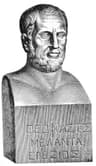


Logos
Reason, word, principle. The rational order that runs through all things, or the capacity in us to perceive it.


Justice
Giving each what is owed. For the Greeks, justice was not just law but the harmony of the soul and the city.
Happiness
Eudaimonia: not pleasure, but flourishing. The Greeks asked not ‘are you happy?’ but ‘are you living well?’

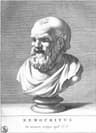

Being
What is real? What truly exists? Parmenides asked the question, and philosophy has never stopped trying to answer it.
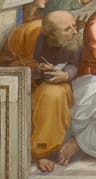

Nature
Physis: the way things grow, move, and are. To live according to nature was the first and last commandment of Greek philosophy.

Skepticism
The discipline of doubt. Not cynicism, but the honest admission that certainty may be beyond us.
Reason
The capacity to think, argue, and understand. The Greeks believed it is what makes us most fully human.
Change
Is change real, or an illusion? Heraclitus said everything flows. Parmenides said nothing does. The debate defined metaphysics.
Moderation
Nothing in excess. The golden mean. The Greeks distrusted extremes and prized the disciplined middle.
Stoic Ethics
Virtue is the only good. Everything else (health, wealth, reputation) is indifferent. You control your judgments, nothing more.
Natural Law
A law above all human laws, written into the structure of the cosmos itself. The Stoics said reason is that law.
The Republic
Not a word for a building, but for an idea: the common good, the public thing, a government that belongs to its people.
Atoms & the Void
The universe is particles in empty space. Everything you see, from stars to your own thoughts, is atoms in motion.
Inner Freedom
True freedom has nothing to do with chains. It is a state of mind: wanting only what is already in your power.
