Idea
Atoms & the Void
The universe is particles in empty space. Everything you see, from stars to your own thoughts, is atoms in motion.
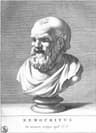
Democritus proposed atoms and void in the fifth century BCE. Epicurus refined the theory, adding the famous swerve, a tiny, random deviation that breaks the chain of determinism and makes free will possible. Lucretius turned all of this into Latin poetry in De Rerum Natura, tracing everything from thunderstorms to love to the fear of death back to the movements of invisible particles. The poem was lost until 1417 and helped restart modern science.