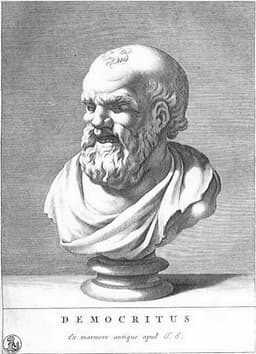
Democritus
Pre-SocraticAtomist
Atoms and void. The universe is particles in motion, and cheerfulness is the goal.
Democritus imagined the world as atoms: indivisible particles moving through empty space, combining and separating to form everything we see. No gods required. He traveled widely, wrote on everything from ethics to embryology, and was said to laugh at human folly. His cheerful materialism anticipated modern science by two thousand years, though most of his writings are lost.
Places
Ideas
Words
“Nothing exists except atoms and empty space; everything else is opinion.”
“Happiness resides not in possessions, and not in gold. Happiness dwells in the soul.”
Works
Fragments on Atoms and the Void
fragmentary·
Democritus wrote prolifically (over 70 works by some accounts) but only fragments survive. They reveal a thinker concerned equally with physics and ethics, atoms and cheerfulness.
Ethical Fragments
fragmentary·
Democritus was as much a moralist as a physicist. His ethical fragments praise cheerfulness, moderation, and the inner life of the soul over wealth and reputation.
Influence
Influenced
- Epicurus
Epicurus built his physics on Democritus’ atomism, adding the famous ‘swerve’ to allow for free will. He admired Democritus more than any other predecessor.
