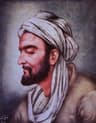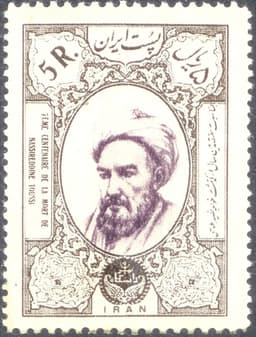
Nasir al-Din al-Tusi
Islamic
Astronomer, mathematician, and ethicist who saved a library from the Mongols and built the observatory that reformed the model of the heavens.
Al-Tusi lived through the Mongol conquest and turned catastrophe into opportunity, persuading the conqueror Hulagu to build him a great observatory at Maragheh with a library of hundreds of thousands of volumes. There he assembled astronomers from across Asia and devised the Tusi couple, a geometric device that improved on Ptolemy and, centuries later, reappeared in the work of Copernicus. He wrote the most influential Persian book on ethics, advanced trigonometry into an independent science, and defended Avicenna's philosophy against its critics. Few minds have been so wide and so exact at once.
Places
Ideas
Words
“The end of philosophy is to order the soul as the astronomer orders the heavens: by measure, not by wish.”
Works
Life & Moments
Born in Tus
Born in the Persian city of Tus, he became a polymath in astronomy, mathematics, and ethics.
The Maragheh Observatory
Persuaded the Mongol conqueror Hulagu to build a great observatory and library, gathering astronomers from across Asia.
Influence
Influenced by
- Ibn Sina
Al-Tusi defended Avicenna's philosophy against its critics and carried his thought into a new age.