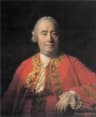
Jeremy Bentham
EnlightenmentBritish
The reformer who reduced morality to a single arithmetic — the greatest happiness of the greatest number — and tried to redesign every institution by it.
Bentham held that nature has placed us under two masters, pleasure and pain, and that the right action is simply the one that produces the most happiness for the most people. From this single principle he set out to rebuild law, punishment, prisons, and government on rational lines, drafting reforms with tireless precision. His design for a prison, the Panopticon, where one unseen watcher might observe all, became a lasting image of modern power. He left his body to be dissected and displayed, an auto-icon still kept in London — a final, characteristic gesture of utility over sentiment. His utilitarianism shaped the modern world's idea of the public good.
Places
Ideas
Words
“It is the greatest happiness of the greatest number that is the measure of right and wrong.”
Works
Life & Moments
Born in London
A prodigy who entered Oxford at twelve, he turned from law practice to the reform of law itself.
Principles of Morals and Legislation
Set out the greatest-happiness principle and began a lifetime of redesigning institutions on rational lines.
Influence
Influenced by
- David Hume
Bentham built his calculus of happiness on the secular, empiricist ground that Hume had cleared.