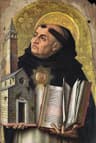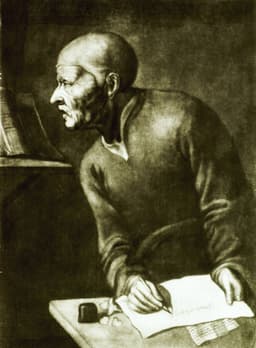
Duns Scotus
ScholasticMedieval
The Subtle Doctor, who argued that being means the same of God and creatures, and that each thing has its own thisness.
Duns Scotus earned his nickname honestly: few thinkers reward and punish attention so equally. Against Aquinas he argued that being is said univocally, in one sense, of God and creatures, or else we could not so much as speak of God. He gave the will a primacy over the intellect, and coined haecceity, thisness, the individuating principle that makes a thing not merely a member of a kind but uniquely itself. His razor-fine distinctions shaped late medieval thought so deeply that centuries later his name, in the mouths of his mockers, gave English the word dunce.
Places
Ideas
Words
“Being is said in one and the same sense of God and of creatures, or we could not speak of God at all.”
Works
Life & Moments
Born in Scotland
Born at Duns in the Scottish borders, he joined the Franciscans and studied at Oxford and Paris.
Lecturing at Paris
Lectured on the Sentences at Paris, refining his doctrines of univocal being and individual thisness with famous subtlety.
Influence
Influenced by
- Thomas Aquinas
Duns Scotus reacted against Aquinas, arguing that being must be said in one sense of God and creatures alike.