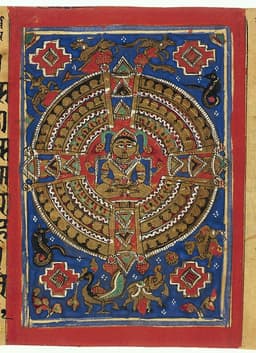
Mahavira
IndianJain
Non-violence taken to its furthest point. He walked naked, swept the ground before each step, and strained his water to avoid harming insects.
Mahavira was a contemporary of the Buddha and the twenty-fourth tirthankara of Jainism. He renounced his princely life at thirty, practiced extreme asceticism for twelve years, and achieved omniscience. He taught that every living thing has a soul, that violence in any form accumulates karma, and that liberation requires complete non-attachment. His followers swept the ground before them and wore cloth over their mouths to avoid accidentally harming tiny creatures. Jain philosophy developed a sophisticated theory of multiple viewpoints: every statement is true only from a particular angle.
Places
Ideas
Words
“Do not injure, abuse, oppress, enslave, insult, torment, torture, or kill any creature or living being.”
“Have compassion for all beings, rich and poor alike; each has their suffering.”
Works
Life & Moments
Born in Vaishali
Born into a royal family in Vaishali, in what is now Bihar. Like the Buddha, he was raised in privilege and left it behind. Jain tradition counts him as the twenty-fourth and last Tirthankara, a ford-maker who shows others the way across the river of suffering.
Achieves Omniscience
After twelve years of extreme asceticism, wandering naked, eating almost nothing, and enduring every hardship without resistance, Mahavira attained kevala jnana, perfect and complete knowledge. He was about forty-two years old.
Teaching Non-violence and Many-sidedness
For thirty years after his awakening, Mahavira taught ahimsa (non-violence toward all living beings) and anekantavada (the doctrine that truth has many sides). He attracted followers from all social classes and built a community of monks, nuns, and laypeople.