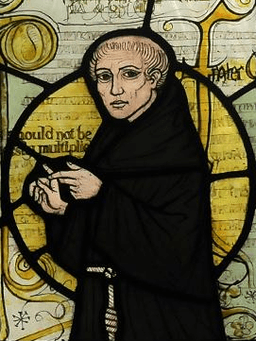
William of Ockham
MedievalScholastic
Do not multiply entities beyond necessity. His razor cut through centuries of metaphysical overgrowth and cleared the ground for modern science.
Ockham was a Franciscan friar who studied at Oxford and developed a philosophy of radical economy. His famous razor (entities must not be multiplied beyond necessity) was a weapon against the elaborate metaphysical systems of his predecessors. He argued that universals are mental constructs, not real things. Summoned to Avignon on charges of heresy, he fled to Munich under the protection of Emperor Ludwig IV. He spent the rest of his life writing on politics and logic. His nominalism influenced the entire trajectory of modern philosophy and science.
Places
Ideas
Words
“Entities must not be multiplied beyond necessity.”
Works
Life & Moments
Studies at Oxford
Entered the Franciscan order as a boy and studied theology at Oxford. He never completed his master's degree, earning the title 'Venerable Inceptor' instead of full professor. His lectures on logic and metaphysics were already making waves.
Summoned to Avignon for Heresy Trial
Called to the papal court at Avignon to answer charges of heresy. He spent four years under investigation. During this time, he became entangled in the Franciscan poverty dispute with Pope John XXII and concluded the pope himself was a heretic.
Flees to Munich
Escaped Avignon by night with other Franciscan dissidents and fled to the court of Ludwig of Bavaria, the Holy Roman Emperor, who was also in conflict with the pope. He reportedly told Ludwig: 'Defend me with the sword, and I will defend you with the pen.'
Dies in Munich
Died in Munich, probably of the Black Death. He was excommunicated and never reconciled with the papacy. His razor, the principle that explanations should not be multiplied beyond necessity, outlasted every pope who condemned him.