Thinkers
ThinkersAtlasTimelineWorks

Thinkers

A story-first philosophy atlas. Explore history's greatest thinkers through place, time, movement, and ideas.

Explore

  • Thinkers
  • Atlas
  • Works

Browse

  • Concepts
  • Volumes

About

  • About Thinkers
  • Image Credits

Volume I · Ancient Greece · 624–262 BCE

Thinkers
ThinkersAtlasTimelineWorks
  1. Home
  2. /Thinkers
  3. /Omar Khayyam

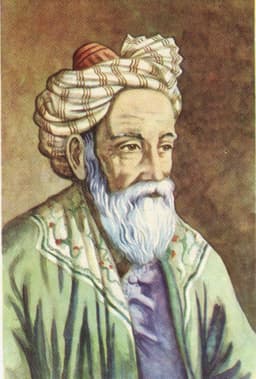
Omar Khayyam

Islamic

Born 1048 CE, Nishapur

Died 1131 CE

Mathematician by day, poet of doubt by night. He solved cubic equations and asked what any of it was for.

Omar Khayyam reformed the Persian calendar to a precision Europe would not match for centuries and gave geometric solutions to cubic equations that anticipated later algebra. He is remembered just as much for the quatrains gathered as the Rubaiyat, where the same mind turns from certainty to wine, mortality, and the silence of the heavens. Be gentle with the moment, the poems say, for it will not return, and the wise grave and the foolish one look alike in the end. Faith and skepticism sit together in him without resolving, which is part of why he still speaks.

Places

Ideas

On the Shortness of LifeReason

Words

“Be happy for this moment. This moment is your life.”

— Omar Khayyam

Works

The Rubaiyat

attributed
·Persian

The quatrains gathered under Khayyam's name turn from certainty to wine, mortality, and the silence of the heavens. Faith and skepticism sit together in them unresolved, which is part of why they still speak.

Life & Moments

1048 CE

Born in Nishapur

Born in the Khorasan city of Nishapur, a center of Persian learning.

1079 CE

Reform of the Calendar

Led the reform of the Persian calendar to a precision Europe would not match for five centuries, while writing on algebra and verse.

Read the Journey →

Thinkers

A story-first philosophy atlas. Explore history's greatest thinkers through place, time, movement, and ideas.

Explore

  • Thinkers
  • Atlas
  • Works

Browse

  • Concepts
  • Volumes

About

  • About Thinkers
  • Image Credits

Volume I · Ancient Greece · 624–262 BCE