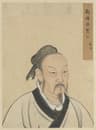
Yang Zhu
Chinese
The philosopher of the self, who would not give a single hair to save the world, and asked why a life should be spent on anything but living it.
Yang Zhu survives mostly in the attacks of his enemies, who were many. Against the Confucian call to sacrifice for society and the Mohist call to love all equally, he insisted on the irreducible value of one's own life and nature. Keep your body whole, do not trade your years for fame or profit, and let the world govern itself. Mencius accused him of selfishness so extreme he would not pluck a hair to benefit the empire. But beneath the provocation lay a serious question — what is a life for? — and his refusal to sacrifice the individual fed directly into Daoism.
Places
Ideas
Words
“Even to benefit the whole world, I would not give a single hair of my body.”
Works
Life & Moments
Born in the Central States
A teacher of the Warring States period who set the value of one's own life against the demands of society.
Each for Himself
Taught that one should not trade a single hair, or a single year, for the empire, scandalizing Confucians and Mohists alike.
Influence
Influenced
- Mencius
Mencius attacked Yang Zhu's egoism as a doctrine that, taken up, would unravel the bonds of society.