Journey
Choose a Journey
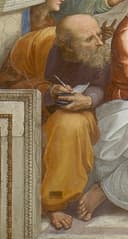
Anaximander
Thales asked what the world is made of. Anaximander answered: nothing you can name. The origin is the boundless.
Anaximenes
Everything is air, thickening and thinning. The first attempt to explain change by a single measurable process.
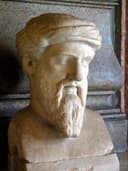
Pythagoras
Number is the language of the cosmos. He built a life around that belief.
Heraclitus
Everything flows. The world is fire, and stillness is a lie we tell ourselves.
Anaxagoras
Mind orders the cosmos. He brought philosophy to Athens and was exiled for saying the sun is a hot rock, not a god.
Zeno of Elea
Achilles can never catch the tortoise. Motion is impossible. He invented the paradox as a philosophical weapon.

Empedocles
Four roots: earth, water, air, fire. Two forces: love draws together, strife tears apart. He jumped into a volcano to prove he was a god.
Protagoras
Man is the measure of all things. The first and greatest of the Sophists turned philosophy toward human judgment.
Gorgias
The sophist who argued that nothing exists, and that if it did, no one could know it, and if they could, no one could say it.
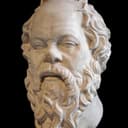
Socrates
He wrote nothing, but changed everything. Philosophy became a conversation.
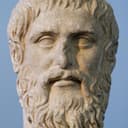
Plato
He saw a world behind the world. The Forms are real; what we see are shadows.
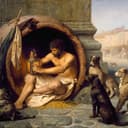
Diogenes
He lived in a jar, mocked convention, and carried a lantern looking for an honest man.
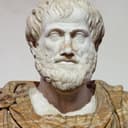
Aristotle
He classified the world. Logic, biology, ethics, politics; he gave each its language.
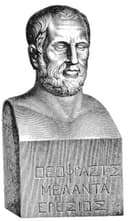
Theophrastus
Aristotle's chosen successor, who turned the master's curiosity on plants, weather, stones, and the small comedies of human character.
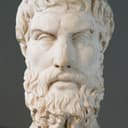
Epicurus
Pleasure is the absence of pain. The good life is quiet, shared, and free from fear.
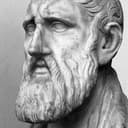
Zeno of Citium
He lost everything in a shipwreck and found philosophy. Then he built Stoicism.