Albertus Magnus
ScholasticMedieval
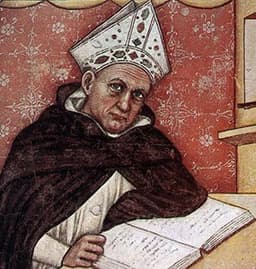
The teacher of Aquinas, who insisted that studying nature carefully was a way of honoring its creator.
Albert earned the title the Great in his own lifetime for the sheer breadth of what he knew. A Dominican who taught at Paris and Cologne, he set himself the task of making the whole of Aristotle available to the Latin world, and along the way wrote firsthand observations on plants, animals, and minerals at a time when most scholars only quoted books. Theology and natural inquiry, he held, need not quarrel: to look closely at the world is to read a second scripture. His most famous student, Thomas Aquinas, carried the synthesis further than the master himself.
Places
Ideas
Words
“The aim of natural science is not to accept what others have said, but to seek the causes at work in nature.”
Works
Life & Moments
Born in Swabia
Born in Lauingen on the Danube, he joined the Dominican order as a young man.
Teaching at Cologne
Founded a house of studies at Cologne and taught the young Thomas Aquinas, while writing firsthand on plants, animals, and minerals.
Influence
Influenced by
- Aristotle
Albert set himself the task of making the whole of Aristotle available to the Latin world.
Influenced
- Thomas Aquinas
Albert taught Aquinas at Cologne and defended his silent student as a voice the whole world would one day hear.