Anselm
MedievalScholastic
God is that than which nothing greater can be conceived. From this single idea he built the most famous proof of God's existence.
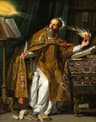
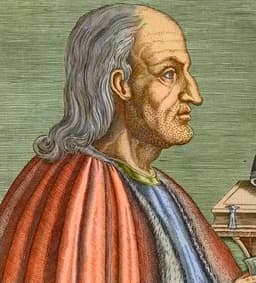
Anselm was born in Aosta in the Alps, became a Benedictine monk at Bec in Normandy, and ended his life as Archbishop of Canterbury. He is remembered for one argument: if God is defined as the greatest conceivable being, then God must exist, because a being that exists in reality is greater than one that exists only in the mind. This ontological argument has been debated for nine hundred years. Descartes, Leibniz, and Godel tried to refine it. Kant, Hume, and Russell tried to demolish it. It refuses to die.
Places
Ideas
Words
“I do not seek to understand so that I may believe, but I believe so that I may understand.”
Works
Life & Moments
Born in Aosta
Born in the Alpine town of Aosta, in what is now northern Italy. His mother was devout; his father was harsh. Anselm wanted to become a monk from childhood, but his father refused. He left home at twenty-three and never went back.
The Ontological Argument
In his Proslogion, Anselm proposed that God is 'that than which nothing greater can be conceived.' If such a being existed only in the mind, something greater could be conceived. Therefore God must exist in reality. Philosophers have been arguing about this ever since.
Becomes Archbishop of Canterbury
Reluctantly accepted the highest ecclesiastical office in England. He spent much of his tenure in conflict with kings over the independence of the church. He was exiled twice. He kept writing philosophy between the crises.
Influence
Influenced by
- Augustine
Anselm built on Augustine's fusion of faith and reason, developing the ontological argument from Augustinian premises.