Confucius
ChineseConfucian
He wandered from state to state, rejected by every ruler, and built the most influential moral philosophy in human history.
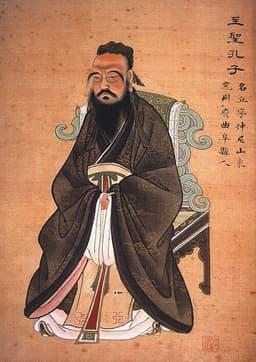
Confucius was born into a minor noble family in the state of Lu. He served briefly in government, then spent fourteen years traveling from court to court, offering his vision of ethical rule to any king who would listen. None did. He returned home and spent his last years teaching. His students recorded his conversations as the Analerta. He taught that society depends on five relationships, each governed by mutual respect: ruler and subject, parent and child, husband and wife, elder and younger sibling, friend and friend. Goodness is not inborn but cultivated through ritual, study, and honest self-examination.
Places
Ideas
Words
“To study without thinking is vain. To think without studying is dangerous.”
“What you do not wish done to yourself, do not do to others.”
Works
Life & Moments
Born in Qufu
Born in Qufu, in the state of Lu. His father was an elderly soldier. The family was poor but claimed descent from Shang dynasty nobility. He grew up knowing both hardship and old ritual.
Fourteen Years Wandering
Left Lu after a political falling-out and spent fourteen years traveling from state to state, offering counsel to rulers. None gave him real power. He kept teaching anyway, gathering students on the road.
Return to Lu
Returned to Qufu an old man. He spent his last years teaching, editing the classics, and mourning the death of his son and favorite student Yan Hui. The wandering was over.
Death in Qufu
Died at seventy-two. His students mourned him for three years, some living by his grave. Within a few generations his teachings would reshape Chinese civilization.
Influence
Influenced
- Mencius
Mencius saw himself as Confucius' true heir. He defended and extended Confucian ethics against critics.
- Xunzi
Xunzi was a Confucian who disagreed with Mencius on human nature. He valued Confucius but insisted virtue must be imposed, not nurtured.
- Mozi
Mozi studied Confucianism before rejecting it. He kept the concern for social order but replaced graded love with universal love.