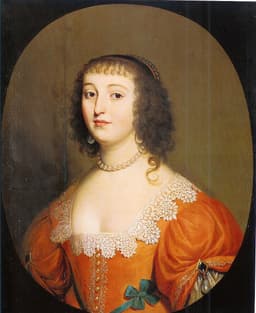
Elisabeth of Bohemia
Early ModernRationalist
She asked Descartes the question he could never answer: if mind and body are separate substances, how does one move the other?
Elisabeth was the eldest daughter of the Winter King, Frederick V, and lived in exile in The Hague. She studied mathematics, languages, and philosophy. In 1643 she wrote to Descartes asking how an immaterial mind could cause physical movement. Her question exposed the deepest weakness of Cartesian dualism. Descartes tried to answer her and failed. Their correspondence, which continued until his death, covers not only metaphysics but ethics, the passions, and the good life. She eventually became Abbess of Herford in Germany. She is the reason we know that Descartes' system had a crack at its center.
Places
Ideas
Words
“I beg you to tell me how the soul of a human being can determine the bodily spirits to perform voluntary actions, being only a thinking substance.”
Works
Life & Moments
Born in The Hague
Born Princess Elisabeth of the Palatinate, daughter of the exiled 'Winter King' Frederick V. She grew up in The Hague, displaced from her family's lands, and received an unusually thorough education in languages, mathematics, and philosophy.
Correspondence with Descartes on Mind and Body
Began a philosophical correspondence with Descartes that would last until his death. In her very first letter, she posed a question he could never satisfactorily answer: how can an immaterial mind cause a physical body to move? The exchange pushed Descartes to revise his thinking.
Becomes Abbess of Herford
Appointed Abbess of the Imperial Abbey of Herford in Westphalia. She turned it into a haven for religious dissenters, sheltering Quakers and Labadists. She governed the abbey for the rest of her life, combining contemplation with practical administration.
Influence
Influenced by
- Descartes
Elisabeth's questions forced Descartes to confront the mind-body problem he had created.