Descartes
Early ModernRationalist
I think, therefore I am. He doubted everything until he found one thing he could not doubt: the fact that he was doubting.
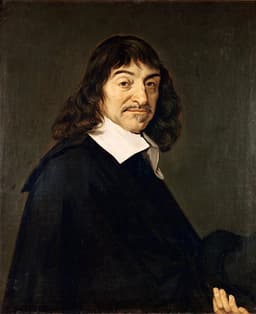
Descartes was a French mathematician and soldier who spent most of his productive life in the Dutch Republic. In 1619, shut in a stove-heated room in Germany, he had three dreams that convinced him he had found the foundation of a new philosophy. He resolved to doubt everything that could be doubted. What survived was the thinking self: cogito ergo sum. From this single certainty he attempted to rebuild all of knowledge. He split the world into mind and body, a division that haunted philosophy for centuries. He died in Stockholm in 1650, tutoring Queen Christina of Sweden in philosophy at five in the morning.
Places
Ideas
Words
“I think, therefore I am.”
“It is not enough to have a good mind; the main thing is to use it well.”
Works
Life & Moments
Born in La Haye en Touraine
Born in a small town in the Loire Valley. His mother died when he was an infant. He was a sickly child, and his teachers at the Jesuit college of La Fleche allowed him to stay in bed late each morning, a habit he kept for life.
The Stove-Heated Room
Stationed as a soldier in Germany, Descartes spent a day shut up in a stove-heated room (a poele) and experienced a series of vivid dreams and visions. He emerged convinced that all the sciences could be unified through a single method grounded in mathematical certainty. He was twenty-three.
Publishes Meditations on First Philosophy
Published in Paris, the Meditations laid out his method of radical doubt and his proof of the thinking self. He sent advance copies to leading thinkers and published their objections alongside his replies. The book reset the agenda for European philosophy.
Dies in Stockholm
Invited to tutor Queen Christina of Sweden, he reluctantly moved to Stockholm. The queen insisted on lessons at five in the morning, in an unheated library, in the middle of a Swedish winter. Within months he caught pneumonia and died. He was fifty-three.
Influence
Influenced by
- Montaigne
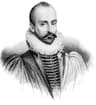
Descartes set out to defeat the very doubt that Montaigne had made fashionable, seeking one certainty that could not be shaken.
Influenced
- Elisabeth of Bohemia
Elisabeth's questions forced Descartes to confront the mind-body problem he had created.
- Spinoza
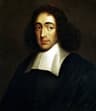
Spinoza took Descartes' substance metaphysics and radicalized it: instead of two substances, there is only one.
- Leibniz
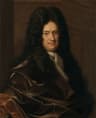
Leibniz developed his monadology partly in response to problems in Cartesian physics and metaphysics.
- Margaret Cavendish
Cavendish rejected the dead mechanical matter of Descartes and Hobbes for a nature alive and knowing throughout.