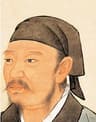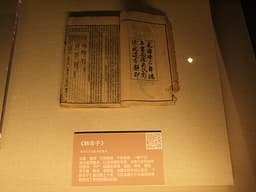
Han Feizi
ChineseLegalist
Forget virtue. People follow incentives. A state runs on law, methods, and power, not the goodness of its ruler.
Han Feizi was a prince of the small state of Han and a student of Xunzi. He stuttered and could not speak persuasively, so he wrote instead, producing the clearest and most ruthless political philosophy in Chinese history. He argued that rulers should rely not on the virtue of their ministers but on a system of rewards and punishments so precise that personal goodness becomes irrelevant. The King of Qin read his work and conquered China using his ideas. Han Feizi himself was imprisoned and forced to take poison by his former classmate Li Si.
Places
Ideas
Words
“When the wise ruler governs his people, he relies not on their doing him good, but on making it impossible for them to do wrong.”
Works
Life & Moments
Writing on Power and Law
Wrote a series of brilliant, cold essays on statecraft. Rulers should trust systems, not people. Reward and punishment are the only reliable tools. Morality is a luxury the state cannot afford.
The King of Qin Reads His Work
King Zheng of Qin read Han Feizi's writings and was so impressed he said he would die happy if he could meet this man. He got his wish. Han Feizi was sent to Qin as an envoy from the rival state of Han.
Poisoned in Prison
Li Si, his former classmate under Xunzi, saw Han Feizi as a rival for the king's favor. He had him imprisoned on false charges and sent poison before the king could change his mind. Han Feizi drank it. The theorist of power died by the logic of power.
Influence
Influenced by
- Xunzi
Han Feizi studied under Xunzi and radicalized his pessimism about human nature into a theory of governance through law.
- Shang Yang
Han Feizi synthesized into theory the Legalist statecraft that Shang Yang had already put to work in Qin.
- Shen Dao
Han Feizi absorbed Shen Dao's doctrine that authority rests on position into the core of Legalist thought.