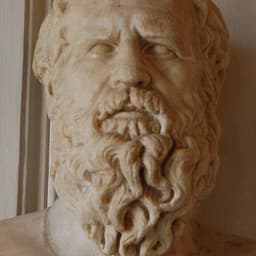
Heraclitus
Pre-SocraticIonians
Everything flows. The world is fire, and stillness is a lie we tell ourselves.
Heraclitus wrote in riddles and refused to explain them. He believed the universe is a process, not a thing, an eternal fire that kindles and goes out in measure. Opposites need each other. Day defines night. War fathers peace. The logos holds it all together, but most people walk through life asleep to it. He was difficult, solitary, and possibly the most original thinker before Socrates.
Places
Ideas
Words
“No man ever steps in the same river twice, for it is not the same river and he is not the same man.”
“The road up and the road down are one and the same.”
“Character is destiny.”
Works
Fragments
fragmentary·
Around 130 fragments survive of a single work, probably called On Nature. Written in deliberately obscure, aphoristic prose. The fragments concern the logos, the unity of opposites, and the image of the cosmos as an ever-living fire.
On the Soul
fragmentary·
Heraclitus saw the soul as made of fire, the noblest element. A dry, fiery soul is wise; a wet soul is foolish or drunk. These fragments, distinct from his cosmic writings, concern self-knowledge and the depth of inner life.
Life & Moments
Depositing His Book
Heraclitus reportedly deposited his book in the Temple of Artemis at Ephesus, deliberately making it hard to access. He wrote in riddles and despised the masses. Only fragments survive, but they are among the most quoted words in philosophy.
Influence
Influenced
- Zeno of Citium
The Stoics adopted Heraclitus’ concept of the logos and his image of the cosmos as a living fire. They considered him a forerunner of their physics.
