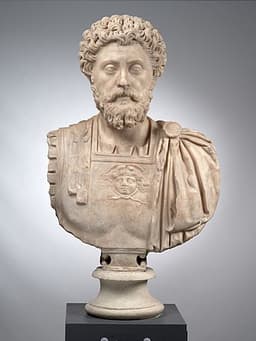
Marcus Aurelius
RomanStoic
Emperor of Rome. Philosopher on the battlefield. His private journal became the most famous Stoic text in history.
Marcus Aurelius never intended to publish his thoughts. The Meditations is a private journal, written in Greek during military campaigns on the Danube frontier, a conversation with himself about how to be a decent person while holding absolute power. He was the last of the Five Good Emperors. Plagues, wars, betrayals. He faced them all and kept writing. The book's power comes from its honesty: it is not a system but a man struggling, night after night, to live up to what he believes. He died at the frontier, possibly of plague, in 180 CE.
Places
Ideas
Words
“The happiness of your life depends upon the quality of your thoughts.”
“Waste no more time arguing about what a good man should be. Be one.”
“You have power over your mind, not outside events. Realize this, and you will find strength.”
Works
Life & Moments
Born in Rome
Born into a prominent family with Spanish roots. Emperor Hadrian noticed the boy early and arranged for his education and eventual adoption into the imperial line. Marcus would have preferred a quiet life of study.
Becomes Emperor
Acceded to the throne at age thirty-nine. Almost immediately, the empire was struck by plague, famine, and invasion on multiple frontiers. The philosopher who wanted nothing more than to read and think spent most of his reign at war.
Writing the Meditations
During the Marcomannic Wars, camped along the Danube frontier, Marcus wrote his private journal: notes to himself on Stoic philosophy, duty, impermanence, and self-control. He never intended anyone to read it. It became one of the most widely read books in history.
Death at the Frontier
Died at or near Vindobona (modern Vienna), still on campaign. His last recorded words to his officers: 'Go to the rising sun; I am already setting.' His son Commodus, who succeeded him, undid much of what Marcus had built.
Influence
Influenced by
- Zeno of Citium
Marcus Aurelius studied Stoicism from youth and tried to live by its precepts while ruling an empire.
- Epictetus
Marcus Aurelius never met Epictetus, but studied the Discourses closely. He quotes and paraphrases him throughout the Meditations.