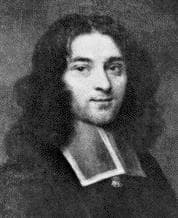
Pierre Bayle
SkepticEarly Modern
The exiled skeptic whose vast Dictionary turned doubt into a method and handed the Enlightenment its arguments for tolerance.
A Huguenot driven from France by religious persecution, Bayle settled in Rotterdam and wrote the Historical and Critical Dictionary, a sprawling work whose real arguments hide in the footnotes. There he set reason against faith, exposed contradictions in every system, and argued that morality does not depend on belief — that a society of atheists could be more virtuous than one of fanatics. His relentless doubt and his case for toleration made him, in Voltaire's phrase, the arsenal of the Enlightenment; the philosophes raided his pages for a generation. He doubted not to destroy but to clear the ground.
Places
Ideas
Words
“An opinion is none the truer for passing from age to age; errors are not improved by being old.”
Works
Life & Moments
Born in France
Born a Protestant pastor's son in the south of France, he was driven into exile by religious persecution.
The Critical Dictionary
Published from Rotterdam the great Dictionary whose skeptical footnotes became the arsenal of the Enlightenment.
Influence
Influenced
- Voltaire
Voltaire and the Encyclopedists mined Bayle's skeptical Dictionary for a generation; he called it the arsenal of the Enlightenment.
- David Hume
Hume inherited Bayle's doubt about the reach of reason, the claims of religion, and the possibility of certainty.