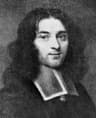
Voltaire
EnlightenmentFrench
The most dangerous writer of the eighteenth century. He used wit as a weapon and spent his life fighting ignorance, superstition, and cruelty in their most powerful forms.
Voltaire was born Francois-Marie Arouet in Paris in 1694 and reinvented himself so thoroughly that the original name hardly matters. He was imprisoned in the Bastille twice, exiled to England, invited to the court of Frederick the Great, and eventually settled at Ferney on the Swiss border, close enough to flee if France came for him. He wrote plays, histories, philosophical tales, and tens of thousands of letters. Candide, his most famous work, mocks the idea that this is the best of all possible worlds by sending its innocent hero through earthquake, inquisition, and war. The closing line, cultivate your garden, is the conclusion of a philosopher who has looked at the human record and decided that modest, practical improvement is the only honest hope. He died in Paris in 1778, returning in triumph after twenty-eight years of exile. He was eighty-three.
Places
Ideas
Words
“Judge a man by his questions rather than by his answers.”
“To hold a pen is to be at war.”
“We must cultivate our own garden.”
Works
Candide
·
A satirical novella published in 1759. Candide is raised to believe this is the best of all possible worlds, then travels through earthquake, shipwreck, war, and inquisition. The book is philosophy disguised as farce.
Treatise on Tolerance
·
Written in 1763 in response to the judicial murder of Jean Calas, a Protestant tortured to death on false charges of killing his son. Voltaire turned the case into a philosophical argument for religious tolerance.
Influence
Influenced by
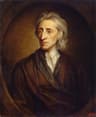
- John Locke
Voltaire's years in England exposed him to Locke's empiricism and Newton's science, which he brought back to France in the Letters Concerning the English Nation.
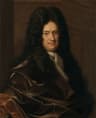
- Leibniz
Leibniz's claim that this is the best of all possible worlds is the direct target of Candide. Pangloss is a caricature of Leibnizian optimism.
- Pierre Bayle
Voltaire and the Encyclopedists mined Bayle's skeptical Dictionary for a generation; he called it the arsenal of the Enlightenment.
Influenced
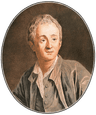
- Denis Diderot
Voltaire and Diderot were the two great figures of the French Enlightenment. They corresponded extensively and shared the project of combating superstition and tyranny.
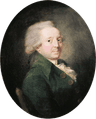
- Condorcet
Condorcet was Voltaire's friend and heir, carrying the campaign against superstition into mathematics and reform.