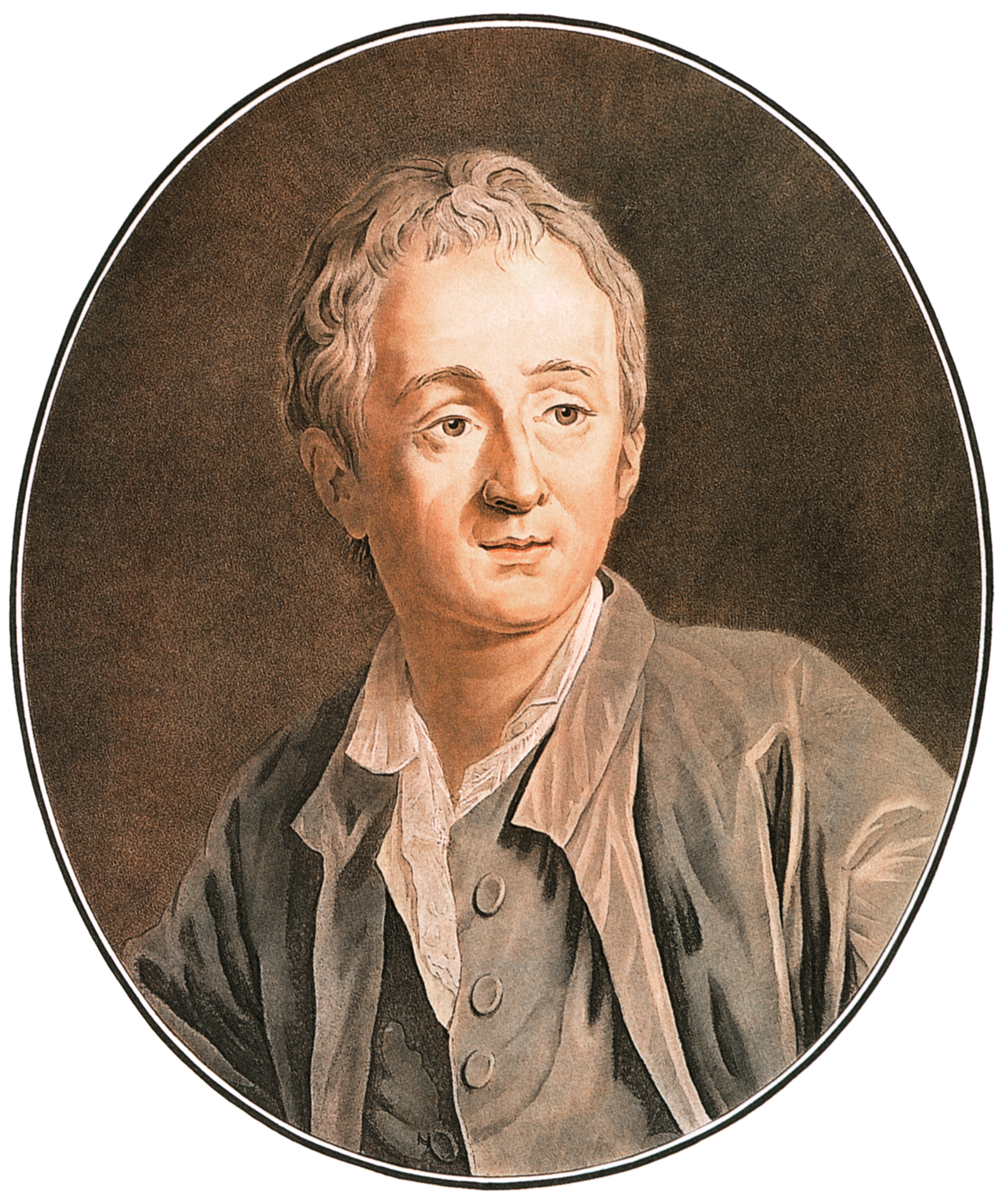
Denis Diderot
EnlightenmentMaterialistFrench
He spent twenty years editing the Encyclopedie, the great project of the Enlightenment. He also wrote some of the strangest and most honest prose of the century.
Diderot was born in Langres in 1713, the son of a cutler, and arrived in Paris to make his fortune as a writer. For twenty years, from 1751 to 1772, he served as the chief editor of the Encyclopedie, a project that aimed to assemble and disseminate all human knowledge. He begged, cajoled, and bullied contributors, wrote hundreds of articles himself, and fought the censors who tried to suppress it. In private, he wrote more freely: Rameau's Nephew, a brilliant dialogue on genius and mediocrity, and D'Alembert's Dream, a materialist account of consciousness that reads more like a twentieth-century novel than an eighteenth-century treatise. He believed that matter, if organized complexly enough, could think. He was right, in ways he could not have imagined.
Places
Ideas
Words
“Scepticism is the first step towards truth.”
“All things must be examined, debated, investigated without exception and without regard for anyone's feelings.”
“There are three principal means of acquiring knowledge: observation of nature, reflection, and experimentation. Observation collects facts; reflection combines them; experimentation verifies the result of that combination.”
Works
Encyclopedie: Preliminary Discourse
·
The preface to the great Encyclopedie (1751-1772), written with d'Alembert. It sets out the Enlightenment's ambition: to map all human knowledge and make it available to anyone who could read.
Rameau's Nephew
·
A dialogue written between 1762 and 1779, published only after Diderot's death. His most original work: a conversation with a brilliant, shameless parasite that becomes a meditation on genius, morality, and social performance.
Influence
Influenced by
- Voltaire
Voltaire and Diderot were the two great figures of the French Enlightenment. They corresponded extensively and shared the project of combating superstition and tyranny.
