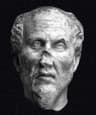
Porphyry
Neoplatonist
Plotinus's brilliant editor, who organized Neoplatonism into a system and wrote the logic primer that medieval Europe argued over for a thousand years.
Porphyry came from Tyre to Rome, became Plotinus's devoted student, and saved his teacher's scattered writings by editing them into the six Enneads. But he was a major mind in his own right. His short Isagoge, an introduction to Aristotle's logic, posed a question almost in passing — do genera and species exist in reality, or only in the mind? — that became the great medieval debate over universals. He also wrote a famous attack on Christianity that the Church later burned, and a defense of vegetarianism rooted in the kinship of all living souls.
Places
Ideas
Words
“We must abstain from the bodily passions if we wish to return, pure, to the company of the divine.”
Works
Life & Moments
Born in Tyre
Born in the Phoenician port of Tyre, he made his way to Rome and the circle of Plotinus.
Editing the Enneads
Gathered and arranged his teacher Plotinus's disorganized writings into the six Enneads, saving Neoplatonism for posterity.
Influence
Influenced by
- Plotinus
Porphyry was Plotinus's devoted student and arranged his scattered writings into the six Enneads.
Influenced
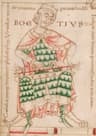
- Boethius
Boethius translated and commented on Porphyry's Isagoge, handing the problem of universals to the medieval West.