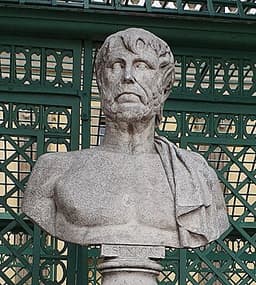
Seneca
RomanStoic
Stoic philosopher, tutor to an emperor, and the richest man in Rome. He wrote about poverty and died by his own hand on Nero's orders.
Born in Cordoba to a literary family, Seneca rose through Roman society, survived exile to Corsica, and returned to serve as tutor and advisor to the young emperor Nero. For eight years he was effectively co-ruler of the known world. When Nero turned monstrous, Seneca withdrew. Eventually accused of conspiracy, he was ordered to take his own life, which he did with Stoic composure. His letters and essays remain the most readable Stoic texts ever written: warm, candid, full of daily observation. He wrote not as a sage but as a man trying to become one.
Places
Ideas
Words
“We suffer more often in imagination than in reality.”
“It is not that we have a short time to live, but that we waste a great deal of it.”
“Luck is what happens when preparation meets opportunity.”
Works
On Anger
·
Three books arguing that anger is never useful, always destructive, and can be prevented by training the mind to pause before reacting.
Letters to Lucilius
·
124 letters to a younger friend, each one a short essay on how to live. Written in Seneca's last years, they are the most personal and readable texts in the Stoic tradition.
Life & Moments
Born in Cordoba
Born in Roman Cordoba, Spain, to a wealthy and literary family. His father was a famous rhetorician. The family moved to Rome when Seneca was young, and he grew up in the heart of the empire.
Exiled to Corsica
Emperor Claudius banished Seneca to Corsica on charges of adultery with the emperor's niece. The charges may have been political. He spent eight years on the island, writing consolations and studying nature. He hated every minute.
Recalled to Tutor Nero
Agrippina, the new empress, recalled Seneca to Rome to tutor her son Nero. For the first years of Nero's reign, Seneca was effectively running the empire. It was, by most accounts, a period of good government.
Forced Suicide
Nero, grown paranoid and murderous, ordered Seneca to take his own life. Seneca opened his veins in a warm bath, dictating to scribes as he bled. He died slowly and with deliberate composure, living out, at the last, the Stoic death he had written about for decades.
Influence
Influenced by
- Zeno of Citium
Zeno founded Stoicism. Seneca carried it into the Roman world three centuries later.
