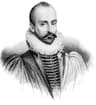
Sextus Empiricus
Skeptic
The doctor who prescribed doubt. Suspend judgment on everything, he said, and tranquility follows on its own.
A physician of the Empiric school, Sextus wrote the only complete account of ancient skepticism to survive. For every claim, he showed, an equal and opposite claim can be raised, so the wise response is epoche, suspension of judgment. The surprise is that this brings not anxiety but peace: stop straining to possess the truth and you stop being tormented by it. He aimed his arguments at the dogmatists of every school, and when his books were rediscovered in the sixteenth century they detonated under Descartes and the whole modern project of certainty.
Places
Ideas
Words
“To every argument an equal argument is opposed; and so we suspend judgment, and tranquility follows.”
Works
Life & Moments
Born
Born somewhere in the Greek-speaking world; the details of his life are almost wholly lost.
Outlines of Pyrrhonism
Set down the fullest surviving account of ancient skepticism, a method for suspending judgment and the tranquility that follows from it.
Influence
Influenced by
- Pyrrho
Sextus systematized and preserved the Pyrrhonist skepticism that traced back to Pyrrho.
Influenced
- Montaigne
The rediscovery of Sextus in the sixteenth century handed Montaigne the skeptical arguments behind his question, what do I know?