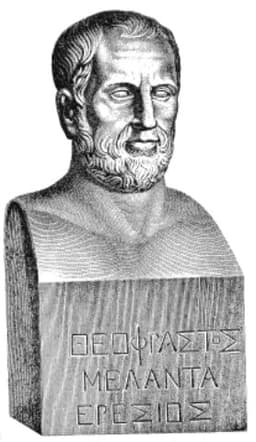
Theophrastus
Peripatetic
Aristotle's chosen successor, who turned the master's curiosity on plants, weather, stones, and the small comedies of human character.
When Aristotle left Athens, he handed the Lyceum and his library to Theophrastus, who ran the school for thirty-five years. He wrote on almost everything, but his botanical works founded the science of plants, classifying hundreds of species with patient firsthand observation. His most charming book, the Characters, sketches thirty human types — the flatterer, the chatterbox, the man who is penny-wise — in a few deft lines each. He kept the Peripatetic method alive: look closely, sort carefully, and trust the world to teach you.
Places
Ideas
Words
“Time is the most valuable thing a person can spend.”
Works
Life & Moments
Born on Lesbos
Born at Eresus on the island of Lesbos, he came to Athens to study under Aristotle.
Heir to the Lyceum
Succeeded Aristotle as head of the Lyceum and led the school for thirty-five years, founding the science of botany.
Influence
Influenced by
- Aristotle
Theophrastus succeeded Aristotle as head of the Lyceum and carried his empirical method into botany and the study of character.
