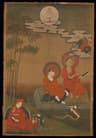
Vasubandhu
BuddhistIndian
The master who mapped the whole of early Buddhist thought, then crossed over to argue that the world we see is mind only.
Vasubandhu first wrote the Abhidharmakosha, the great compendium that systematized the entire Buddhist analysis of mind and matter into interlocking lists — the standard reference for centuries. Then, converted by his brother Asanga, he turned to the Yogacara school and argued something stranger: the external world is a construction of consciousness, appearing real the way objects in a dream appear real. In twenty and then thirty terse verses he laid out how mind alone, ripening from its own seeds, projects the world it then mistakes for solid. Reality is not denied, but relocated — from out there to in here.
Places
Ideas
Words
“All this is consciousness only, for the world appears as the objects of a dream appear.”
Works
Life & Moments
The Abhidharmakosha
Wrote the great compendium that systematized the entire Buddhist analysis of mind and matter.
The Turn to Mind-Only
Converted by his brother Asanga, he turned to Yogacara and argued that the external world is consciousness only.
Influence
Influenced by
- Nagarjuna
Vasubandhu's Yogacara took shape alongside the Madhyamaka tradition that Nagarjuna founded, the two great wings of Mahayana thought.
Influenced
- Dignaga
Dignaga studied under Vasubandhu and turned the Yogacara analysis of mind toward logic and the theory of knowledge.