Zhuangzi
ChineseDaoist
Am I a man who dreamed he was a butterfly, or a butterfly dreaming it is a man? He turned philosophy into wild, luminous stories.
Zhuangzi took Laozi's ideas and made them stranger, funnier, more radical. Where the Dao De Jing is spare and gnomic, the Zhuangzi is full of talking animals, monstrous trees, and sudden shifts in perspective. He taught that the distinctions we take for granted (right and wrong, life and death, self and other) are products of a limited viewpoint. The sage wanders freely because he has stopped insisting the world match his categories. He was offered a position as prime minister and declined, saying he would rather drag his tail in the mud like a turtle.
Places
Ideas
Words
“Once Zhuang Zhou dreamt he was a butterfly. A butterfly flitting about. He did not know he was Zhuang Zhou.”
“The fish trap exists because of the fish. Once you have gotten the fish, you can forget the trap.”
Works
Life & Moments
Born in Song
Born in the state of Song. Almost nothing about his life is certain. He held a minor government post and seems to have preferred poverty to politics.
Declining the Prime Ministership
The King of Chu sent two officials to offer Zhuangzi the position of prime minister. He was fishing at the time. He asked them whether a sacred tortoise would rather be dead and venerated, or alive and dragging its tail in the mud. They got the point.
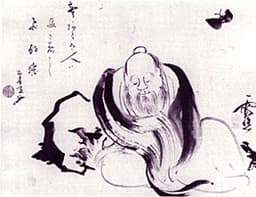
The Butterfly Dream
Zhuangzi dreamt he was a butterfly, happy and unaware of being Zhuangzi. When he woke, he could not tell: was he a man who had dreamt of being a butterfly, or a butterfly now dreaming of being a man? The question still has no answer.
Influence
Influenced by
- Laozi
Zhuangzi inherited and expanded Laozi's teachings. Where the Dao De Jing is spare, the Zhuangzi is wild and inventive.
- Liezi
The Liezi and the Zhuangzi share the same wild, parable-driven Daoism of dreams and transformation.
- Hui Shi
Hui Shi and Zhuangzi were lifelong debating partners; Zhuangzi mourned that after his friend died he had no one worth talking to.