Diogenes
ClassicalCynic
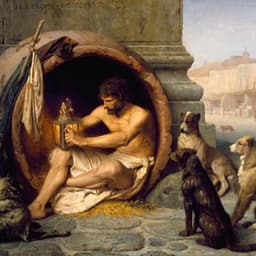
He lived in a jar, mocked convention, and carried a lantern looking for an honest man.
Diogenes took philosophy out of the lecture hall and into the street. He slept in a large ceramic jar, owned almost nothing, and confronted Alexander the Great without flinching. His philosophy was radical simplicity: strip away custom, status, and comfort, and what remains is a human being, free. The Cynics who followed him believed that virtue meant living according to nature, and that most of civilization was a distraction from it.
Places
Ideas
Words
“I am a citizen of the world.”
“It is not that I am mad, it is only that my head is different from yours.”
Works
Anecdotes & Sayings
attributed·
Diogenes wrote nothing that survives. His philosophy lives in stories, told by Diogenes Laertius, Plutarch, and others, of radical freedom, public provocation, and devastating wit.
The Republic of Diogenes
lost·
Diogenes reportedly wrote a Republic that made Plato's look tame. It abolished currency, borders, and social convention. Only fragments and descriptions survive through later authors.
Life & Moments
Exile to Athens
Diogenes was exiled from his hometown of Sinope, reportedly for defacing currency. He arrived in Athens with nothing and began studying under Antisthenes, a follower of Socrates. He never looked back.
Meeting Alexander the Great
Alexander found Diogenes sunbathing and asked if there was anything he could do for him. Diogenes replied: stand out of my sunlight. Alexander reportedly said that if he were not Alexander, he would wish to be Diogenes.
Influence
Influenced by
- Socrates
Diogenes radicalized Socratic simplicity. Where Socrates questioned convention through argument, Diogenes demolished it through action.
Influenced
- Zeno of Citium
Zeno studied under Crates the Cynic, a direct follower of Diogenes. Cynic asceticism and indifference to convention shaped the ethical core of Stoicism.

