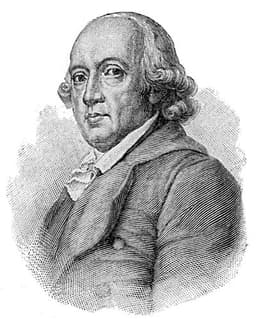
Johann Gottfried Herder
EnlightenmentRomantic
He taught that each people has its own genius and each language its own world, planting the seeds of history, culture, and nationhood as we know them.
A student of Kant who turned against the cold universal reason of the age, Herder argued that humanity does not come in one standard model but in a garden of distinct cultures, each with its own spirit, shaped by climate, history, and above all language. To think, for Herder, is to think in a particular tongue, so every people sees a world no other can quite enter. He gathered folk songs, championed the value of the supposedly primitive, and read history as the unfolding of human variety rather than a march toward a single goal. From him flow modern ideas of culture, nationalism, and the historical understanding of the mind.
Places
Ideas
Words
“Each nation carries the center of its happiness within itself, as every sphere has its center of gravity.”
Works
Life & Moments
Student of Kant
Born in East Prussia and trained under Kant, he turned against the cold universal reason of the age.
The Weimar Years
Settled in Weimar and worked out his philosophy of culture, language, and history alongside Goethe.
Influence
Influenced by
- Immanuel Kant
Herder studied under Kant, then turned against his cold universal reason for a philosophy of culture, language, and history.
- Jean-Jacques Rousseau
Herder took from Rousseau the value of the natural and the particular against the abstractions of civilization.