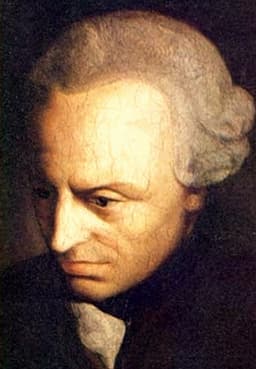
Immanuel Kant
EnlightenmentIdealistPrussian
He never left Konigsberg. He remade philosophy. The mind does not simply receive the world; it constructs it. Everything after him is a response.
Kant was born in Konigsberg in 1724, the son of a harness-maker, and lived there his entire life. He was so punctual that his neighbors set their clocks by his afternoon walk. He woke at five, drank tea, and wrote. He lectured on geography, mathematics, physics, and philosophy for forty years. When he was fifty-seven he published the Critique of Pure Reason, one of the most difficult and transformative books in the history of thought. It argues that space, time, and causation are not features of the world but structures of the mind through which we experience it. We never encounter things as they are in themselves, only as they appear to us. The Groundwork for the Metaphysics of Morals followed in 1785, laying out the categorical imperative. He died in 1804, aged seventy-nine, reportedly saying: Es ist gut. It is good.
Places
Ideas
Words
“Two things fill the mind with ever-increasing wonder and awe: the starry heavens above me and the moral law within me.”
“Dare to know! Have the courage to use your own understanding.”
“Act only according to that maxim by which you can at the same time will that it should become a universal law.”
Works
Groundwork for the Metaphysics of Morals
·
Published in 1785. A short, difficult book that tries to establish the single principle underlying all of morality: the categorical imperative. Act only as you would want everyone to act.
Critique of Pure Reason
·
Published in 1781, revised 1787. The most important philosophical work of the modern era. Kant argues that space, time, and causation are structures imposed by the mind on experience, not features of the world itself.
Influence
Influenced by
- David Hume
Kant famously said that reading Hume awakened him from his dogmatic slumber. The Critique of Pure Reason is largely an answer to Hume's skepticism about causation.
- Jean-Jacques Rousseau
Kant kept only one picture on his wall: a portrait of Rousseau. Rousseau's insistence on human dignity and freedom shaped the categorical imperative.
Influenced
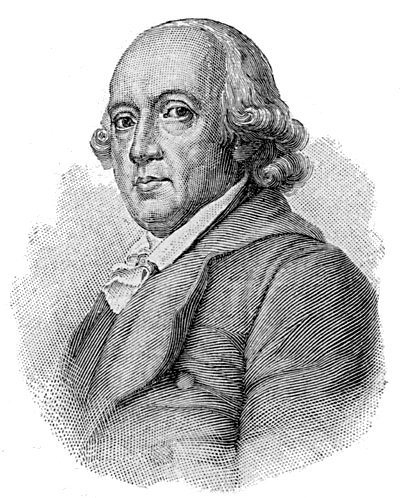
- Johann Gottfried Herder
Herder studied under Kant, then turned against his cold universal reason for a philosophy of culture, language, and history.