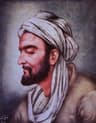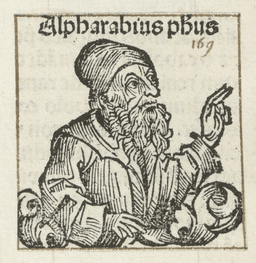
Al-Farabi
IslamicPeripatetic
The Second Teacher (after Aristotle). He mapped out the perfect city and placed the philosopher at its head.
Al-Farabi came from Central Asia to Baghdad, where he mastered logic, music, and political philosophy. He wrote commentaries on Aristotle so clear that he earned the title Second Teacher. His most famous work imagines a virtuous city ruled by a philosopher-prophet who combines reason and revelation. He classified the sciences, wrote on the meaning of intellect, and composed treatises on music that influenced both Islamic and European theory. He lived simply and died in Damascus.
Places
Ideas
Words
“The virtuous city is one in which people help each other to attain happiness.”
Works
Life & Moments
Studies in Baghdad
Arrived in Baghdad and studied logic, philosophy, and music under Christian scholars who had preserved the Aristotelian tradition. He lived simply, working as a night watchman in a garden to support himself while he studied.
The Second Teacher
Earned the title 'the Second Teacher' (after Aristotle) for his comprehensive commentaries on logic and metaphysics. He systematized the relationship between Aristotelian philosophy and Islamic theology in a way no one had managed before.
The Virtuous City
Wrote The Principles of the Views of the Citizens of the Virtuous City, a work that merged Plato's Republic with Islamic political thought. The ideal state, he argued, is one where the ruler is both philosopher and prophet.
Death in Damascus
Died in Damascus at roughly eighty years old. He had spent his last years at the court of Sayf al-Dawla in Aleppo. Despite his immense learning, he reportedly owned little and lived with few possessions.
Influence
Influenced by
- Plato
Al-Farabi's Virtuous City draws directly on Plato's Republic, adapted for an Islamic context.
Influenced
- Ibn Sina
Ibn Sina read Al-Farabi's commentary on Aristotle's Metaphysics and said it finally opened the text to him.