
Place
Athens
The intellectual center of the ancient world. Athens gave rise to democracy, tragedy, and philosophy as a civic practice. The Agora, the Academy, and the Lyceum all stood within its walls.
Thinkers Connected to Athens
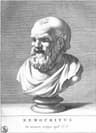
Democritus
Atoms and void. The universe is particles in motion, and cheerfulness is the goal.
Anaxagoras
Mind orders the cosmos. He brought philosophy to Athens and was exiled for saying the sun is a hot rock, not a god.
Protagoras
Man is the measure of all things. The first and greatest of the Sophists turned philosophy toward human judgment.

Socrates
He wrote nothing, but changed everything. Philosophy became a conversation.

Plato
He saw a world behind the world. The Forms are real; what we see are shadows.

Aristotle
He classified the world. Logic, biology, ethics, politics; he gave each its language.

Diogenes
He lived in a jar, mocked convention, and carried a lantern looking for an honest man.

Epicurus
Pleasure is the absence of pain. The good life is quiet, shared, and free from fear.

Zeno of Citium
He lost everything in a shipwreck and found philosophy. Then he built Stoicism.
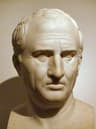
Cicero
He translated Greek philosophy into Latin and into politics. Rome's greatest orator was also its most restless thinker.
Gorgias
The sophist who argued that nothing exists, and that if it did, no one could know it, and if they could, no one could say it.
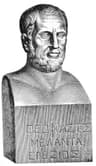
Theophrastus
Aristotle's chosen successor, who turned the master's curiosity on plants, weather, stones, and the small comedies of human character.
Proclus
The last great systematizer of pagan philosophy, who built Neoplatonism into a vast cathedral of being just as the ancient world was ending.